

 Nov 09, 2026 - Cameron Brierley
Winter is the toughest time of year for a home gym. Most of the home gyms we set up are in garages and outbuildings, which aren't normally insulated as thoroughly as the rest of the house. That means they get cold and damp in the winter months, which is bad news for the equipment inside if it isn't managed properly.
Fortunately, maintaining a home gym is pretty straightforward. Most of the advice on this page boils down to a couple of simple truths: keep your gym room as dry as possible and don't let moisture build up on the equipment.
We've covered winter first, since that's where most of the challenge comes from, before moving on to some more general pointers near the end.
Keeping your home gym running in winter
1.Why does gym equipment rust in winter?
Rust forms on metal when it's exposed to oxygen and water. You can't do anything about the oxygen in the air, which means the one thing you can control is the moisture in the room.
In winter, most of that moisture comes from condensation. Since the garage is usually the coldest part of the house, condensation can build up more quickly, especially once you've been training in there and giving off body heat.
In an ideal world you'd heat the garage to the same level as the rest of the house, but the cost of doing that can be considerable.
So the reality is a cold room that warms up while you're exercising, before the moisture in the air settles on your dumbbell handles, barbells and rack uprights. That's condensation, and it won't take long for rust spots to show if it's left untreated.

2.Does sweat make rust worse?
Yes. Sweat contains small amounts of salt, which speeds up the rate at which metal rusts.
Leaving sweat on gym equipment is a problem all year round, but it's worse in winter because the room stays damp for much longer after you've finished using it.
So if you've built up a sweat during your session (which is what most of us are in there for), take a minute to wipe down your bar and other metal touchpoints so they're dry when you leave the room.
3.How do you stop condensation in a garage gym?
Using a dehumidifier is the most effective way to fight condensation in your gym. Where possible, an electric unit works best. Leave it running for a couple of hours after you train to clear the moisture left in the air. If your unit has a humidity setting, setting it to around 50% and leaving it to do its thing is even better.
If the cost of an electric unit is off-putting, even a small one that absorbs moisture passively is better than nothing.
Besides a dehumidifier, the other tip to keep in mind is to air out your gym regularly. It can be tempting to keep the windows and doors shut during the winter, but that means any moisture in the air has nowhere to go. Leaving your door open for five minutes after training makes a big dent in the moisture level.
4.Should you heat your garage gym?
Yes, ideally you should keep your garage at least partly heated during winter. It makes training a lot more comfortable, and there's a longevity benefit for your equipment too. A room kept at a steadier temperature builds up much less condensation than one that's icy cold right up until you use it, then warms up quickly from your body heat while you train.
Insulating the room helps a great deal here. If you're having an outbuilding put up, features like double glazed windows and proper wall insulation will keep it at a more comfortable temperature.
It's also one of the reasons we recommend proper gym flooring. It protects your subfloor and equipment, true enough, but thick rubber also keeps the room better insulated than bare concrete.
We aren't suggesting turning your garage into a sauna, but even small steps to keep the room warm can make a noticeable difference to how well your kit holds up over winter.
5.Why are there gaps in my rubber floor tiles?
Small gaps between your rubber floor tiles are common in the winter months. They're caused by the rubber contracting slightly in the cold.
They'll expand again as the weather warms up in spring and the gaps will close back up on their own, so there's no need to be alarmed if you notice this in your own gym.
If you'd rather avoid winter shrinkage, thicker tiles like our 30mm option hold up better in the cold.

Choosing new flooring?
Our gym flooring guide covers thickness, finishes and how much of the room to tile.
6.How do you protect your bars, plates and dumbbells over winter?
The exposed metal on these pieces of equipment suffers the most during winter, so it's worth paying extra attention to it.
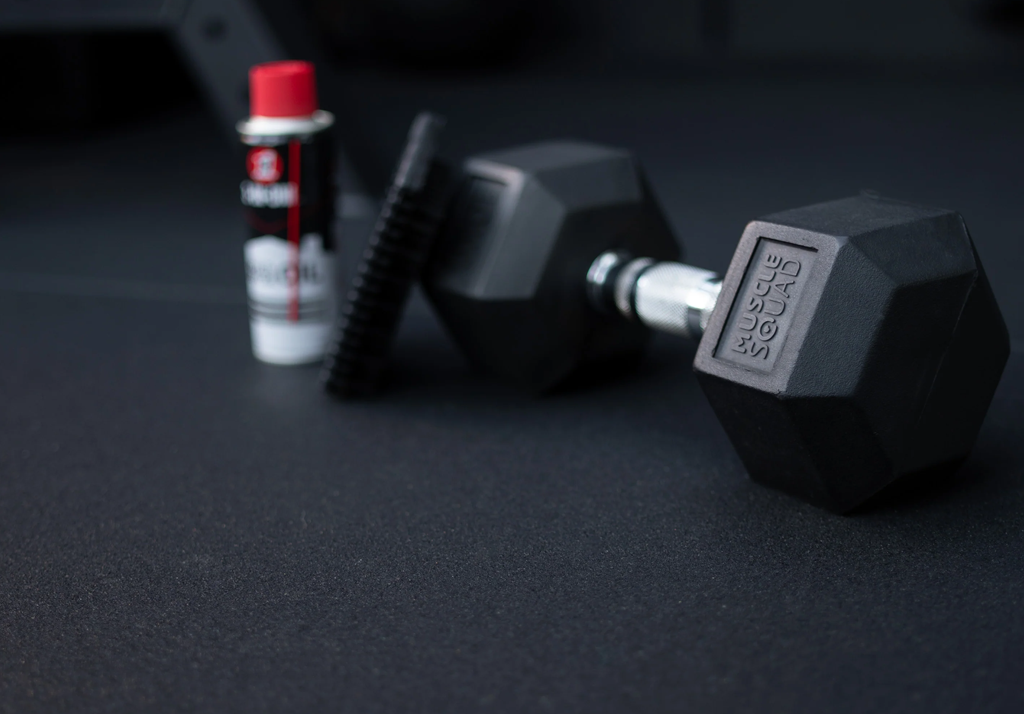
Wipe down the handles of your bars after each session, and every few months, apply a light coating of 3-in-1 oil with a dry cloth. It creates a barrier between the steel and the damp air.
Year-round home gym maintenance
7.Wipe your equipment down after every session
Keeping equipment dry by wiping it down after use is always a smart idea, not just in winter. You don't need anything fancy for it. A tea towel or dry cloth works fine, since the aim is simply to make sure no moisture is left on your equipment overnight.

8.Clean and oil your bars and handles
Every so often, give the knurling on your barbells and dumbbells a proper clean. Chalk and sweat build up in the knurling over time, and both hold onto moisture, which is the one thing you're trying to keep away from the steel.
If you've ever been in a commercial gym and noticed rusty dumbbell handles, this is how it happens. It's not as though people are pouring water over the weights; it's years of training that gradually let moisture build up.
All you need is a bottle of 3-in-1 oil and a brush. You can get a dedicated barbell brush online, or use any stiff nylon brush. Steer clear of wire brushes though, as they can scratch the finish on your bar. Scrub the dirt out of the knurling first, then wipe a thin layer of oil over the bar and work it in with the brush. Leave it for a few minutes, then wipe it clean with a dry cloth.
It's a small job, but your bars will last a lot longer and look a lot better for it.

9.Keep the floor clear
Grit and small stones get walked into your home gym on outdoor shoes. Left on the floor, they can scratch and damage your equipment when you drop weights on them.
Keep the floor clean by sweeping and hoovering it every few weeks so debris doesn't build up.
10.Check your equipment every few months
Every few months, go over your equipment properly. Look for loose bolts, frayed or worn cables and anything else that doesn't look quite right, then deal with any issues you find.
Trust your instincts, too. You know the equipment you train on regularly. If something starts to feel off, particularly a cable, it might be time to apply some silicone oil to the guide rods or check the cable hasn't got twisted somewhere in the system.

Looking after a specific piece of kit?
We've written more detailed guides on squat rack maintenance and cable machine maintenance.
How often should you maintain your home gym?
If you'd rather have it all in one place, here's a rough schedule to work from.
Wipe down your bars, handles and bench pads.
Sweep the floor and check for damp patches or rust spots.
Clean and oil your bars, and check bolts and cables.
Set up a dehumidifier and heater.

Leave a comment: