

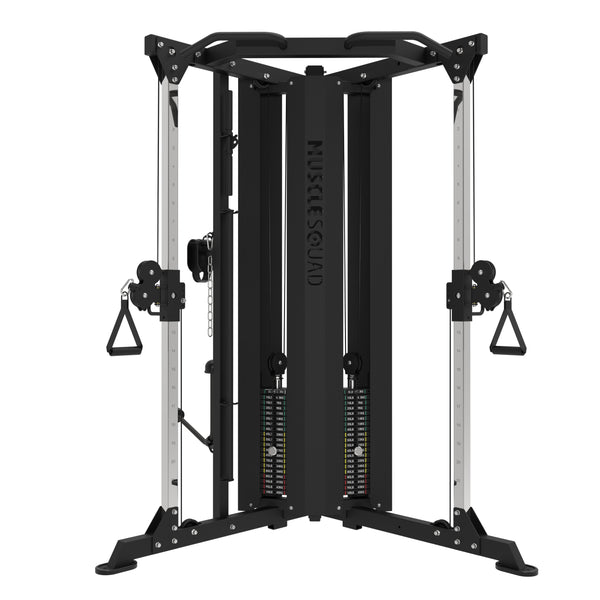
Cable Machines
You’ll struggle to find a piece of gym equipment as versatile as the cable machine. Whether you opt for a single or a dual pulley machine, you’ll be able to hit every major muscle group with this winning piece of kit. Find the perfect cable machine for you in our wide range.


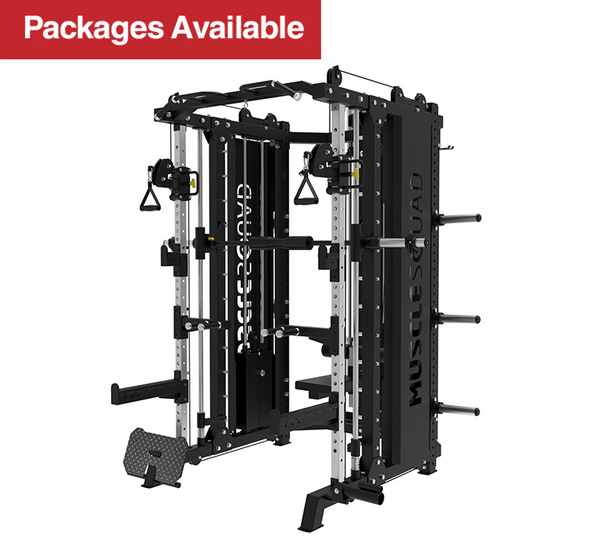

 Pre Order

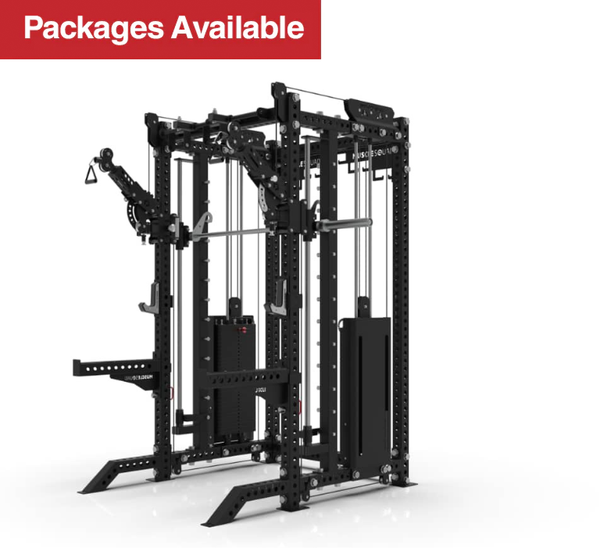
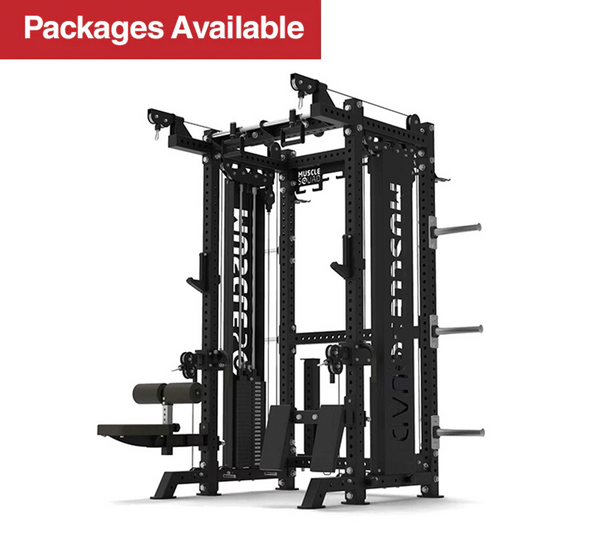


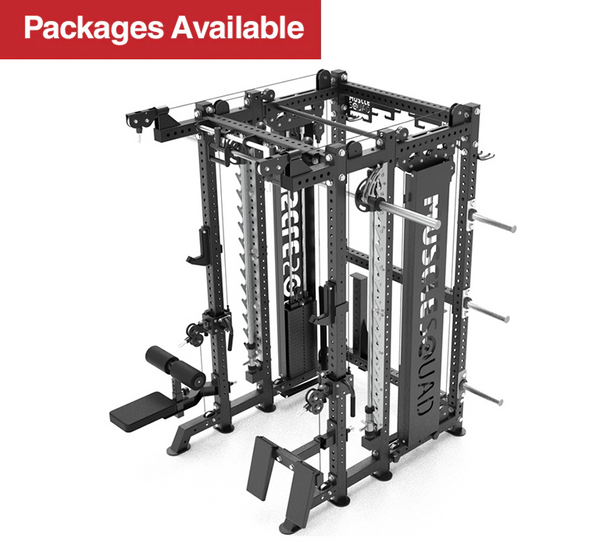

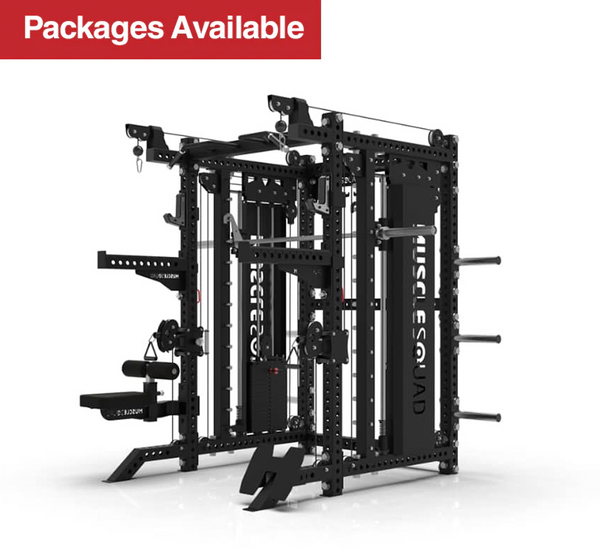
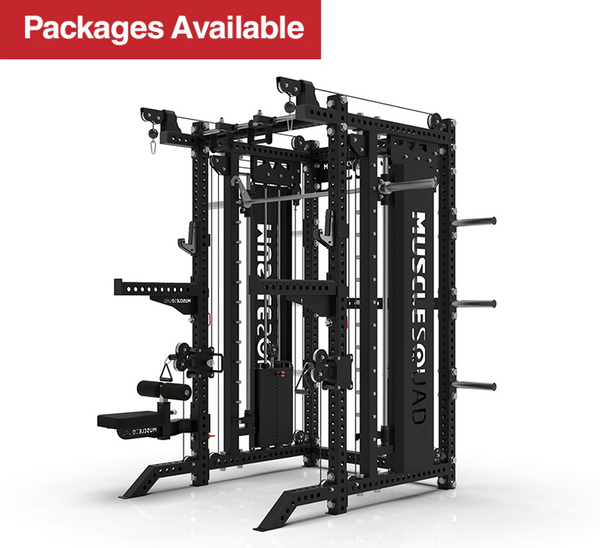


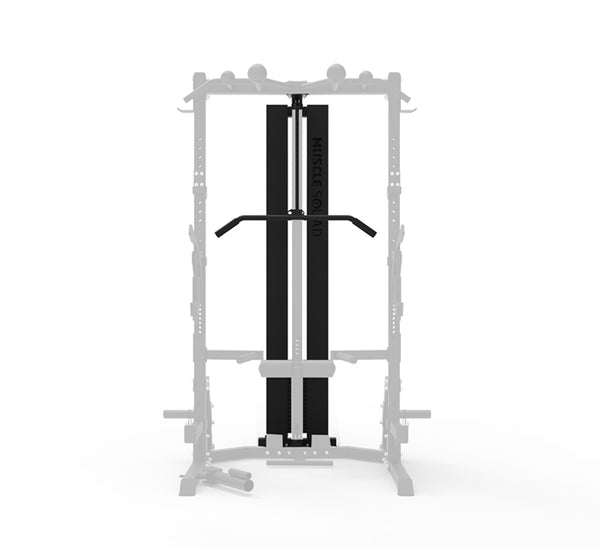
What you should know about cable machines
Cable machines are a versatile piece of gym equipment that use a weight stack or a set of weight plates attached to a cable to create resistance.
They come with a single or dual pulley system and can be adjusted to train nearly every muscle at a variety of weight levels. As such, they’re a favourite of veteran lifters and newcomers and are equally useful in a commercial gym as they are in a home gym.
Look through our products and see which machine suits you best. We’ve answered some of your most common questions below to help you make the best decision.
FAQs
01
What’s the difference between a 1:1 and a 2:1 cable machine?
A 1:1 cable machine means that 20kg of weight creates 20kg of resistance. A 2:1 cable machine means that 20kg of weight creates 10kg of resistance.
Since you only feel half of the weight on a 2:1 machine, it means that you can increase your weight in smaller increments as you get stronger. It’d be difficult to move your tricep pulldown weight up by 5kg each time, but is a lot easier when the felt weight is 2.5kg. The cable also runs for longer on a 2:1 machine which means you’re less likely to run out of slack as you’re working out.
A 1:1 pulley is great for exercises where you’re going to be moving a lot of weight, like lat pulldowns, since you feel the full resistance from the weight stack.
The majority of our cable machines are 2:1, with the exception of the Multi-Functional Trainer and our plate-loaded cable machines. Some of our racks offer 1:1 and 2:1 training stations in the same piece of equipment, which helps you reap the benefits of both setups.
Check the description of each product to see its weight ratio, or read our cable ratio guide to understand the pros and cons to each one.
02
Is a cable machine better than free weights?
There’s no right or wrong answer to this — they’re different pieces of equipment.
The main difference between cables and free weights is that cables support your lift the entire way through. You’re pulling (or pushing) a weighted cable through the same range of motion with each rep. This can help you establish good form – especially in beginners. They can also be gentler on people with joint pain since it’s a more controlled, supported lift.
On the flip side, the added control of a cable machine can reduce how broadly you engage your muscles. You’re not battling gravity like you are with free weights, so it’s more likely that you’re going to be isolating a certain part of the muscle you’re training. This can be a positive or a negative depending on your goals.
As a general rule of thumb, you'll get the best results by combining free weights and cable work.
03
What are the benefits of training with a cable machine?
A cable machine is a versatile piece of exercise equipment. You have so many resistance levels to choose from which means you can do heavy or light lifts on a single machine.
The controlled range of motion that you train in can also be easier on your joints, which is especially helpful for anyone who suffers from joint pain to ease them back into training.
They’re also compact for the number of ways you can train on them. If you have a home or garage gym setup, you can place a cable machine in the corner and hit every major muscle group with a bit of research.
04
What cable machine should I buy?
This all depends on the space you have available and your budget. Look through our cable machines and find one that suits your space perfectly and has all of the features you need.
The standard Multi-Functional Trainer and our plate-loaded cable machines operate on a 1:1 ratio. Our other cable machines operate on a 2:1 ratio. See the earlier question on weight ratios if you’re unsure which is more suitable for you.
If you have the space for it, the Advanced Multi-Functional Trainer is a superb choice for utilising the 2:1 cable stacks on the side of the rack, along with the heavier, 1:1 rear stack for your big lifts.
Our Phase 2 Quarter Rack and our Phase 2 Freestanding Folding Rack are both very popular options for people who are looking for an entry-level machine. These come in either a plate-loaded or pin-loaded version.
On the upper end of things, the Multi-Functional Trainer and the Phase 4 Trainer each include a dual cable stack and come with a whole bunch of other features as well.
05
How do I assemble my cable machine after purchase?
All of our cable machines come with an instruction manual to guide you through the assembly process. For our larger machines, you can also choose to add installation to your purchase when checking out, in which case a member of our team will deliver your rack and build it all for you.
06
What safety precautions should I take when using a cable machine?
When you’re lifting up the weight stack, don’t put anything in between the plates. And whenever you’re exercising, always listen to your body and consult a doctor or physician first so you know you won’t be hurting yourself.
07
Can I customise the resistance on a cable machine?
You can! It’s one of the main benefits to cable machines and why they’re so popular at home gyms; you have a huge amount of weight options to choose from in a single product.
For plate-loaded cable machines, you can go up in whatever increment you like. If you want to increase your weight by 5kg, add a 2.5kg plate to each side. If you want to go up by 2.5kg, add a 1.25.kg plate to each side.
On our pin-loaded cable machines, you adjust the resistance by simply inserting the pin into a different plate in the stack.
08
Should I get a cable machine for my home gym?
A cable machine is one of the most powerful additions for a home gym. The sheer number of attachments means there’s no shortage of ways in which you can push your body. Lat pulldowns and tricep pulldowns are two movements that can only be done through a cable machine – and they’re a staple for nearly every lifter.
Beyond these, you can train pretty much every muscle group with a cable machine. Slap a straight bar or a rope extension on and you’ll set your biceps on fire. Use a row extension and you’ll be activating your back with every squeeze. When it comes to getting the most out of your home gym, a cable machine is essential.
09
What exercises can I do with a cable machine?
The better question would be: what can’t you do with a cable machine! The most common exercises that people use a cable machine for are lat pulldowns, chest flys and tricep pushdowns. But with a bit of creativity, you can train just about every muscle group.
Want to grow your shoulders? You can do front raises, side raises and seated shoulder press with a cable machine. Rather sharpen those abs? Use a rope extension to do weighted crunches and then thank (or curse) us tomorrow. You can even perform a makeshift squat with your pulley! Seriously, a cable machine is the best-in-class piece of gym equipment when it comes to versatility.
10
How do I look after my cable machine?
Make sure you store your machine in a well-insulated dry room. Leaving your machine outside can damage the metal if it’s exposed to extreme weather.
When buying heavy equipment like this, it’s always worth investing in gym flooring so that you protect your equipment and your home/garage.
Finally, if your cable pulley feels rough or like it’s encountering resistance, add a little bit of silicone oil to the pulley guide rods. This will help the cable glide and should make it good as new.
11
What’s the warranty on your cable machines?
All of our products come with one year of manufacturer’s warranty. Check out our warranty information here for all the details.
12
Can you assemble my cable machine for me?
We can do installations on select orders. Please reach out to the team before you purchase to see if it’s something we can offer. Alternatively, we have a list of of UK-based assembly companies that we recommend to people.