

 Nov 07, 2026 - Cameron Brierley
While we wish it did, progress in the gym can't continue forever. It's likely that after the honeymoon period in your training, when you're seemingly picking up a heavier weight each week, you'll encounter your first plateau. It can be daunting when you stop progressing at the pace you had been previously, but plateaus are simply another part of training.
This is what a plateau is, how to reset yourself after encountering one and how to ensure it doesn't halt your progress for longer than it needs to.
What is a training plateau?
A training plateau is when your progress stalls, even though you're still hitting the gym regularly and keeping to your schedule.
It's frustrating, especially the first time you run into one, because it can feel like you're doing everything right without seeing the results for it.
Don't think yourself into a spiral though: plateaus happen to everyone as the body adapts to the training stimulus it's facing, and can be broken.

What are the signs you've hit a plateau?
The sooner you recognise a plateau, the sooner you can start correcting the course.
Your lifts haven't gone up in several weeks, even though your training has stayed consistent.
The scale has stayed in the same place for a few weeks, even though you're sticking to your plan.
How do you break through a training plateau?
If you have hit a plateau, our recommendation is simple: change something. That could be one of a number of things that we'll cover in more detail, but change is essential.
If you're throwing the same formula at your training and expecting new results, you're not going to get anywhere.
There are a few things you can change in your training schedule that can pull you out of a plateau.
1.Change your exercises
Changing the exercises is one way you can challenge your muscles in a different way, which can help break through the roadblock you're experiencing.
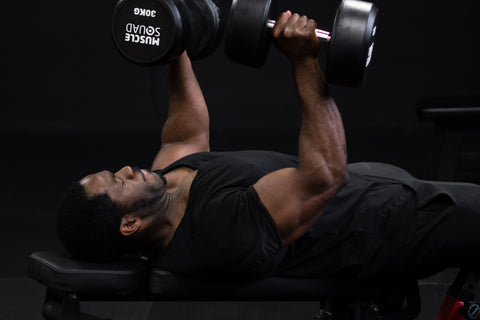
Let's say that bench press is your main pushing exercise for chest, and you've reached a point where you can't advance the lift. Why not switch over to flat dumbbell press instead? It's the same movement pattern, but since the load is held in each arm separately, it strengthens your stabilising muscles which could be what's holding you back.
After a few weeks on a different variation, the strength you've built will carry over to other movements, like the bench press you were struggling with.
2.Change your rep range
Changing the rep range you work in is one of the most effective ways to get past a plateau.
Say you're shoulder pressing 25kg dumbbells for 7 to 8 reps, and you've been stuck on that weight for a few months. Drop down to 20 or 22.5kg and focus on getting as many reps as you can instead.
If you hit 11 reps with the 20kg dumbbells one week, aim for 12 the next. Keep building your reps for a few weeks, then go back to the 25kg dumbbells. You'll have built up more muscular endurance and may find it easier to push past your old 7 to 8 rep barrier.
Track your progress for free
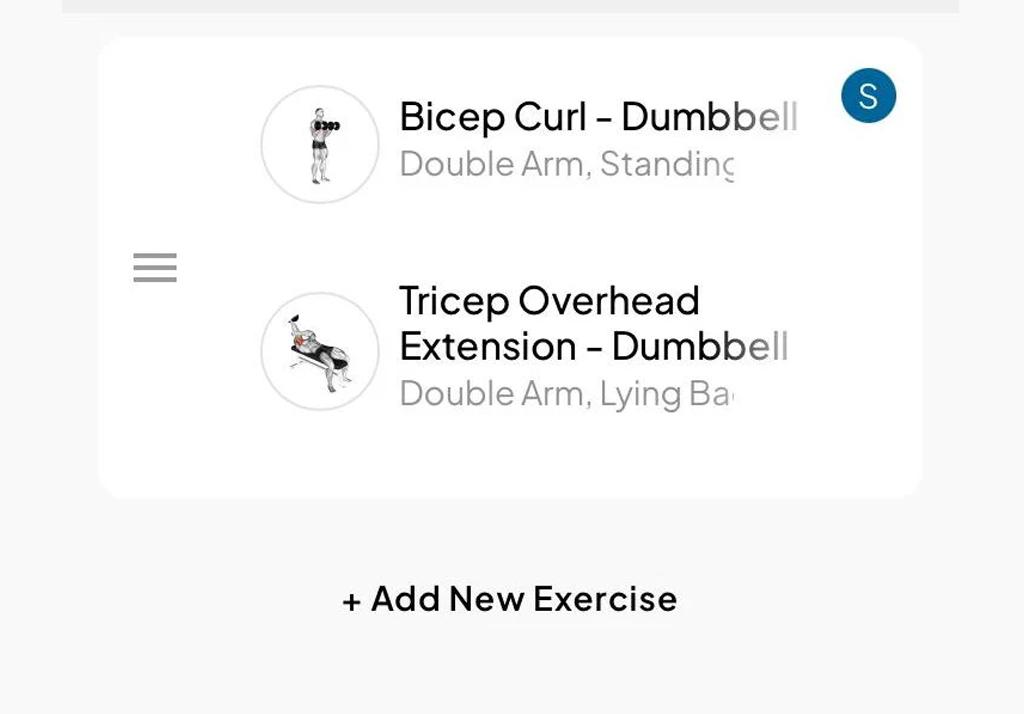
Our free training app makes it easy to log your weights and reps, so you can see exactly when you're ready to move back up.
3.Take time to rest and recover
Rest days are as important as days in the gym, since it's the time where your muscles recover. They don't mean sitting on the sofa all day, though. Active recovery, like gentle stretching, yoga or walking, helps promote blood flow and speed up recovery.
Listen to your body. If you're feeling tired or sore, take an extra rest day so you can recover fully. When people first get into the gym, it's common for them to throw themselves into it excessively, not leaving room for adequate rest. After a while, this can catch up to you and stunt your progress.
It's also worth looking into what a deload week is and taking one every few months. It's basically a week where you still train, but drop the weight or number of sets. It gives your body a chance to clear built-up fatigue, and you'll often come back stronger for it.
4.Review your nutrition and hydration
What you eat plays a huge role in how you perform in the gym. If you're struggling to progress, it may be time to review what you're putting into your body.
You'll be able to find much more detailed nutrition guides than what we can tell you, but here are a few key points:
- Carbs aren't the enemy. They're fuel for the body, which is what powers progress in the gym.
- Make sure you're eating enough protein every day, not just when you hit the gym. 1.5g to 2g of protein per kg of bodyweight is a good guideline for building muscle and strength.
- Prioritise whole foods rather than processed food.
Make sure you're drinking enough water, too. Your intake as a whole determines your performance, so take it seriously if you want to see meaningful results.
5.Get advice from a qualified professional
If you've been stuck for a while and tried everything above, it may be time to get advice from a personal trainer or coach. They can look at your current routine, spot where you can improve and put together a structured plan to get you progressing again.
If you think the issue is your diet, speak to a nutritionist. We all have such different eating requirements that it's impossible to give a one-size-fits-all remedy.

Training plateau FAQs
Is it normal to hit a plateau?
Yes. Everyone hits a plateau eventually. It usually means your body has adapted to your current training, which is a sign you've already made good progress.
How long does a training plateau last?
It depends on what's causing it. Many people start progressing again within a few weeks of changing something, whether that's their exercises, rep ranges, recovery or nutrition.
How often should you take a deload week?
A common approach is to deload every 4 to 12 weeks, or whenever you notice fatigue building up and your performance dropping.


1 comment
May 30, 2023 • Posted by Malick
I highly appreciate you for sharing this “Changing exercises, you perform can help give your muscles new stimulus and break through a plateau. For example, let us say you have been bench pressing for the last year, as your primary chest movement and you have reached the point where you have stopped progressing in the bench press. You could try incorporating close grip bench pressing to help improve your regular bench, close grip bench puts emphasis on your triceps which can help strengthen them more than the standard bench press.” Interested people can search here for fitness-related products. https://www.maskura.co.uk/collections/fitness
Leave a comment: