

 Jul 22, 2026 - Cameron Brierley
We've been manufacturing gym equipment since 2017 and know exactly what it takes to make a product last. A squat rack takes regular punishment; it holds hundreds of kilograms of weight, deals with the added stress load from the barbell landing on the J-hooks or spotter arms and needs to maintain its structural integrity through sun and sweat, cold and condensation.
The good news is that it's very easy and quick to keep your squat rack functioning for years to come.
Why do I need to maintain my squat rack?
A squat rack is a simple piece of kit but absolutely essential to look after when it comes to the safety of your gym. Whether you're racking the barbell after a set of squats or bench presses, you want to be absolutely certain that when you release the bar, everything stays exactly where it should do.
Safety is the before, middle and after of squat rack maintenance. Here's what you should look out for.
Place it wisely
Where you build your rack matters more than you might think.
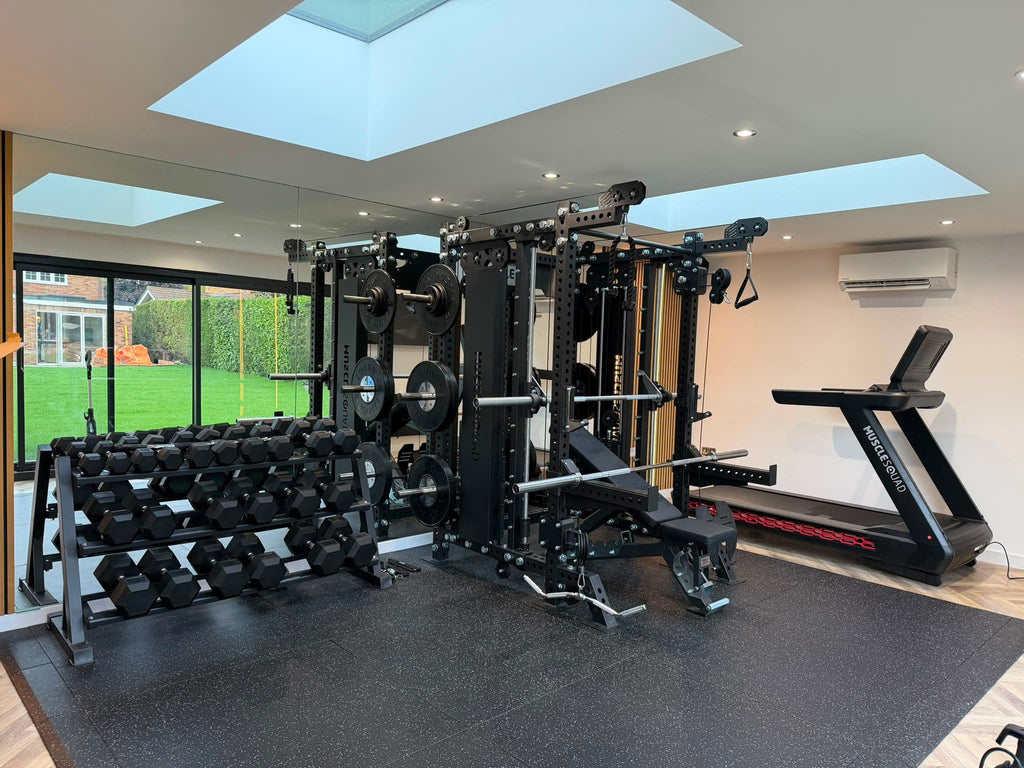
Make sure it's in a dry, temperature-controlled room. Moisture in the air causes rust, which in turn weakens the steel frame. Cold, uninsulated garages in the winter are usually the worst offenders, especially here in the UK. If your gym room isn't insulated or part of your central heating, then wipe away any condensation you spot on the frame before it has a chance to sit there.
Set the rack up on level, cushioned flooring. Placing a rack down on an uneven floor can lead to wobbling and instability when you train, especially when racking a heavy bar. The answer to this is rubber gym flooring. It gives you a flat, stable surface to work from and is heavily recommended outside of the stability it provides, as it gives you a training area where you can drop weights as needed.

Keep the frame clean and tight
A squat rack's two killers are moisture and movement.
Wipe sweat off the frame after your toughest sessions. In an ideal world you'd do this after every workout, but we know that's not a realistic ask. At the very least, give the uprights and J-hooks a wipe down after the sessions that leave you dripping, especially in the height of summer. Sweat is as damaging to metal as condensation is if it's left to build up.
Clean chalk off the pull-up bar. Especially if you use liquid chalk for pull-ups or dead hangs. Chalk traps moisture in underneath it, which makes it harder to keep the frame dry and rust-free.
Tighten bolts periodically. The stress load of racking a barbell can cause bolts to loosen over time, so give the whole frame a check every few months and tighten up any bolts that have loosened.

Look after your J-hooks and spotter arms
J-hooks and spotter arms are the parts of your rack that see the most contact, so they're worth a closer look.
Check the plastic coatings for wear. Most manufacturers, us included, use plastic-covered J-hooks to avoid the barbell scraping against exposed metal. The only downside of this is that plastic isn't as durable as steel, so check it every so often for dents or cracks. It doesn't need to be often; every few weeks while you're resting between sets is ample.
Avoid dropping the bar from height. Most home gym owners treat their kit very well, but it's still worth pointing out. Just because you can train by your own rules, doesn't mean you should give into every impulse. Dropping the bar onto the J-hooks or spotter arms from height for the sake of it is just asking to shorten your equipment's lifespan. Heavy drops should be for genuine bail outs and failed reps only.

Mind your load limits
Squat racks have load ratings for a reason. Follow them.
Don't exceed the load limit. Your manufacturer should have outlined your rack's load rating in the manual that came with it when you purchased or on their website. If you aren't sure, reach out to them and ask. These numbers aren't plucked from thin air; they're tested during construction based on the materials used. Especially in cheaper, thinner squat racks, you don't want to discover the load rating the wrong way.
Spread unused weight plates evenly across the storage horns. Did you know the weight storage horns on squat racks also have load ratings? To adhere to them, spread your weight plates evenly around the rack. It'll look better, be more functional and is far safer than piling everything onto the same two horns.

Cable-equipped racks
If your squat rack comes with a cable system, then there's a fair bit more to it than this. We've written a full guide on keeping your cables running smoothly which you should read as well.

Leave a comment: