

 Sep 22, 2026 - Cameron Brierley
Squat racks come in all shapes and sizes. From simple squat stands to cable-equipped racks and multi-station rig systems, they're a lot more than a steel frame.
We've been manufacturing gym equipment for almost a decade now and have all the answers you need to build a better understanding of squat racks.
What is a squat rack?
At its core, a squat rack is a pair of steel uprights wide and strong enough to hold a barbell. The uprights are typically 1.1m to 1.2m in width, though the complete product can end up being quite a bit wider if it includes a Smith machine or weight storage poles.
Its main job is to hold a loaded barbell in place so that it can be racked and re-racked during compound lifts. As the category has advanced, though, squat racks have evolved to do a whole lot more than that.
Types of squat rack
There are seven main types of squat rack, each with a different footprint, price and set of features.
Squat stand
The simplest and most affordable option. A squat stand is a pair of freestanding uprights that suspend a barbell between them. They usually come with adjustable J-hooks, the cups that the barbell sits in, that can be moved up and down the frame.
 York Squat Stand
Squat stands are good at serving the simple barbell lifts like squats and bench press, but they're lacking in any other features. They don't always come with spotter arms, either, which is a key safety feature in squat racks.
Squat rack
A step above squat stands is the classic squat rack, which uses uprights to join the two sides of the rack into a single frame. This increases its stability and also its footprint, though this isn't always a bad thing. A lot of basic squat racks still come with a pull-up bar and spotter arms, giving you more training options and added safety when working out alone.
 MuscleSquad Squat Rack
It's a good starting point for a lot of home gyms, not costing too much while still providing safe and confident barbell training.
Wall-mounted squat rack
Wall-mounted squat racks are almost identical to a standard squat rack with one key difference that you've already guessed: they bolt into the wall. This helps keep your floor space clear, which is especially important in single garages and room conversions, and some wall-mounted racks even fold away when not in use to offer a further reduced footprint.

You'll need to confirm your wall is suitable for bolting a squat rack onto, though. It should be clear of skirting boards, as these will prevent the rack from lining up flush against the wall, and should go into a solid surface that can carry the load. If you're unsure, consult a building professional before you attach a rack to your wall, since it won't only need to be able to support a heavy static weight, but also the added stress from racking and re-racking the bar.
Folding squat rack
Folding squat racks do what they say on the tin: fold away for a more compact profile when they're not in use.

Because of their moving parts, folding racks don't tend to have any extra features beyond their main purpose. That said, in cases where you only have a small space, they're an absolutely fine option to work with.
Power rack
Power racks are similar to squat racks, but include a full four-post cage. You'll normally have the J-hooks on the rear uprights, and a pair of safety bars running between the uprights to catch the bar in case of failed lifts.

Using four posts instead of two also makes them a lot more stable than a standard squat rack. The trade-off is space, since they're deeper and can't be folded away.
All-in-one systems
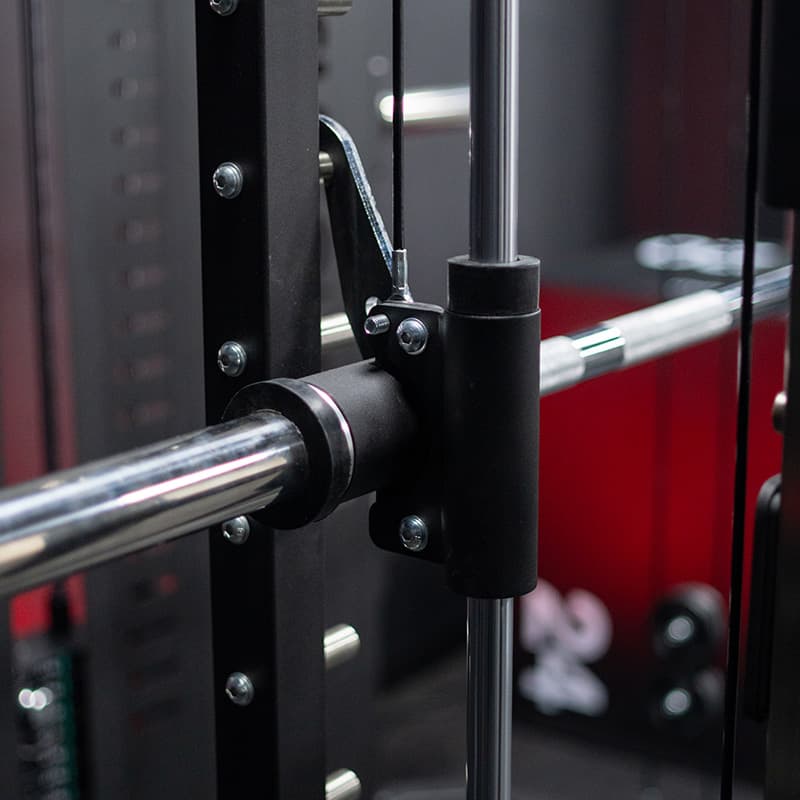
An all-in-one system takes the four-post frame of a power rack and works extra machines into it, usually a cable machine, Smith machine or both. They're by far the most popular option in the home market since you get several pieces of kit for the space and price of one.

All-in-one racks are what we're known for. A machine like the Phase 3 Modular has everything you need to form the backbone of a home gym in one unit, while offering the kind of build quality you'd expect to find in your local gym.
Full rig
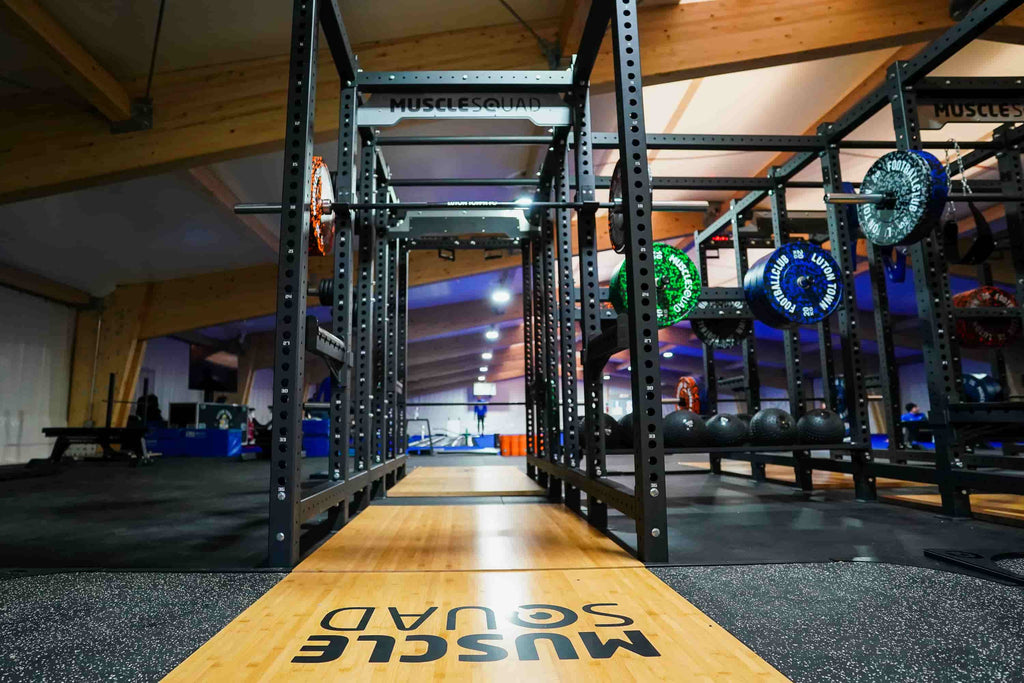
A full rig is a long, multi-station frame with several squat bays, weight storage and attachment points along a single structure. They're usually seen in the functional strength area of your local gym, and can house several people training at once, whether that's CrossFit, TRX, powerlifting or something else.
 Vulcan Full Rig
These rigs are often made-to-order to suit a customer's requirements. If you're building a commercial space yourself, take a look at our gym design page to get started.
The specs that matter
Those are the main types of squat rack that you'll come across, each with their own set of pros and cons. Whichever you choose, there are some key questions you should ask yourself before making the investment.
Wall-mounted or freestanding?
Generally, we'd only recommend a wall-mounted rack if space is at a real premium. You'll find more features in a freestanding rack and are much more flexible if you ever need to move them.
Folding or fixed?
In the same vein, we only recommend folding racks when the space demands it. In all other instances, a fixed rack is going to offer more stability and, importantly, the option for cables and other extra features.
Frame thickness
Not all steel is made equal. There are two measurements to be aware of when shopping for squat racks: the width of the uprights and the thickness of the steel.
Lighter racks commonly use 50mm x 50mm uprights, which means that the square frame is 5cm on each side. As a rule of thumb, the wider the steel tubes are, the sturdier the rack will be. Uprights are sometimes sold in a 60mm x 60mm size too, reaching up to 75mm x 75mm in the more commercial-grade units.
The other measurement to understand is frame thickness. This is how thick the steel is on each side of the uprights. Lighter racks tend to start at 2mm thick, increasing up to 3mm in more heavy-duty pieces of equipment.

So a 50mm x 50mm x 2mm frame means the uprights measure 5cm on each side and are 2mm thick. It's worth understanding these measurements as you'll come across them a lot while browsing.
Powder-coated steel or stainless steel?
Most squat racks come with a powder-coated steel finish. It's durable, looks smart and the powder coating protects the frame from rusting.
The only drawback is that if the powder coating chips, the steel below is exposed to rust. This isn't an issue in most insulated gyms, but it's still worth touching up any affected spots with a rust-resistant paint if this does happen.
The alternative is stainless steel, though this is a lot less common in fitness equipment because of its cost and the sheer amount of steel that a heavy-duty squat rack needs. We sometimes use 304 stainless steel in custom commercial builds, but powder-coated steel is more than suitable for most gyms.
Spotter arms
In our eyes, spotter arms are an essential part of a squat rack. They're the longer inserts that slot into your rack below your J-hooks, and are there to bail you out of failed lifts when training solo. Using them is simple: before loading the bar with heavy weight, find the lowest point of your lift and set your spotter arms up there. Then if you can't bring the weight back up on the concentric, the spotter arms are there to catch the barbell and avoid a painful, and potentially dangerous, situation.

They're also worth having for deadlifts and bent over rows, where you can rest the bar at a fixed height between sets. We highly recommend choosing a squat rack that comes with spotter arms.
Attachment options
Nearly every squat rack has holes that run along the length of the uprights. The size and spacing of these holes determine which attachments can be mounted to the frame. The more attachments you can use, the better.
Squat rack attachments include dip bars, jammer arms, lat pulldown seats and more. Even if you don't plan on using these immediately, the option of adding them to your setup after purchasing is invaluable and helps avoid a situation where you find yourself wanting to re-buy in a few years.
Check that your manufacturer has a deep enough attachment line to futureproof your lifting. It's not the end of the world if they don't; there are custom-order websites where you can get attachments made to a certain hole spec, but it's always easier when the options already exist. Have a look at our rack attachments to see what's available for the MuscleSquad range.
Pull-up bar
Most squat racks come with a built-in pull-up bar. It makes sense given the height of the rack and is often the only piece of equipment in a home gym that enables pull-ups.
Some squat racks come with multi-grip bars, some come with adjustable ones. Some have straight bars, while others use speciality grips like cannonball handles in there.

If pull-ups are a large part of your training, you should make certain that you're happy with the pull-up bar on your squat rack.
Whichever design you go for, we recommend leaving 30cm of clearance above the frame to perform pull-ups comfortably. If muscle-ups are in your programme, then you'll need a lot more than just 30cm.
What's the difference between a squat rack and a Smith machine?
Squat racks and Smith machines can both be used for the same core selection of exercises, but there are some key differences that set these pieces of equipment apart.
We've answered the differences between squat racks and Smith machines in a separate article, but here are the takeaways:
Holds a free barbell, which means you control where the bar moves and have to subconsciously engage your stabiliser muscles to keep it steady.
Works in a fixed plane, which can be gentler on the joints and more effective at isolating certain muscle groups, though does sacrifice developing the stabilisers as a result.
Smith machines are great for beginners looking to get into barbell movements and are the natural choice for exercises like incline chest press and overhead press, where the overhead nature can make un-racking a standard barbell uncomfortable.
Smith machines are marginally safer for solo training, since they can be latched anywhere along the frame, but we do maintain that training on a squat rack with spotter arms is a near-equal level of safety.
You don't have to choose between the two, either. Plenty of all-in-one systems include both a squat rack and Smith machine in the same frame. For a full breakdown, read our Smith machines 101 guide.
What to consider before buying a squat rack
Before investing in a major piece of equipment like a squat rack, it's important to ask yourself a few questions to make sure it lasts you for years.
Measure your height and space
Ceiling height is always the biggest blocker to a squat rack. It's the first measurement you should take and is likely to determine what rack you're able to buy.
Remember to allow an extra 30cm of clearance above the frame if you're looking to train pull-ups.
The other measurement that can catch people off-guard is width, since the rack isn't actually what you need to think about here. A standard barbell is 7ft in length. Even a 6ft international bar is going to be wider than the squat rack itself, and you need to allow room on either side to load plates. 30cm is plenty.
Max load
Even the most entry-level squat racks we sell have load ratings well above 100kg, going all the way up to 350kg.
Here's the kicker though, and we don't mean to sound like we're interviewing you for a job: where do you see yourself in five years? You want the load rating to be able to handle your lifts as you grow stronger, so it's well worth buying a rack you can grow into rather than having to replace one you've outgrown.
Warranty
A squat rack is a large investment and should last you for years. Look for a warranty that covers the frame under normal use, as it shows the manufacturer trusts its own build. All of our squat racks have a 10-year warranty on the frame.
How do I build a squat rack?
When you order a squat rack, you have two choices: build it yourself, or find somebody else to build it for you.
Sometimes the manufacturer will offer to deliver and build the rack for an extra fee. If that's not an option, you can look for a local tradesperson who might be able to put it together, though you should vet them thoroughly and make sure they genuinely know what they're doing first.
If you decide to build it yourself, here's what to know.
Two people are needed to build a squat rack, since the taller components need holding steady while they're bolted in.
The rack itself is broken down into lots of manageable parts when it's shipped, and usually no single part weighs more than 25kg. It'll be a tiring day, but most people, especially those buying gym equipment, will be able to move everything themselves.
You can expect a simple build, with no cables involved, to take a couple of hours. All-in-one systems take considerably longer, often around 4-6 hours.
Is it hard to build a squat rack?
If you're a reasonably handy person who's used to assembling household equipment, you can put together a piece of gym equipment. It's not too different from flat-pack furniture, and only really gets challenging once cables and Smith machines are involved.
Come equipped with the instruction manual and a toolkit including a spanner, electric drill and socket wrench kit. We prepare YouTube build videos for our most popular racks, emailed to customers after purchase. It's a genuinely useful resource to have on hand while you build, so check whether your manufacturer offers something similar.
Follow these tips if you're building the rack yourself:
- Don't tighten the bolts fully until the end of the build. Leaving them loose makes sure each part fits together properly.
- Lay your gym flooring first and install the squat rack on top of it.
- Build your rack in the location you want it to live. It's heavy to move once it's assembled!
What exercises can I do on a squat rack?
A standard squat rack opens the door to so many exercises. We've grouped some of the most popular below, along with the additional equipment you'll need to perform them.
With only a barbell
- Back squats
- Front squats
- Deadlifts
- Romanian deadlifts
- Rack pulls
- Overhead press
- Push press
- Split squats
- Bent over rows
- Standing calf raises
With a bench and barbell
- Bench press
- Incline bench press
- Close-grip bench press
- Seated overhead press
- Hip thrusts
- Bulgarian split squats
With the pull-up bar
- Pull-ups
- Chin-ups
- Hanging knee raises
If your rack has a cable machine built in, then there's even more training options available to you. We've covered some of them in our cable machines 101 guide.
How do I maintain my squat rack?
Squat racks take a lot of punishment, and keeping them operating smoothly becomes a safety question more than most pieces of equipment in your gym. We have a full article on maintaining a squat rack, but the takeaways are:
- Set up the rack on level, even flooring so the load spreads evenly through the frame
- Tighten bolts as needed, since heavy use can loosen them over time
- Wipe sweat and chalk off the frame to protect the finish
- Respect load limits, and never load the rack beyond what it's rated for


Leave a comment: